Product
Caller ID Reputation: Why Your Numbers Get Flagged & How to Fix It
Learn what caller ID reputation is, why numbers get flagged as spam, and how to maintain clean numbers that prospects actually answer.
Symbo Team
Learn what caller ID reputation is, why numbers get flagged as spam, and how to maintain clean numbers that prospects actually answer.
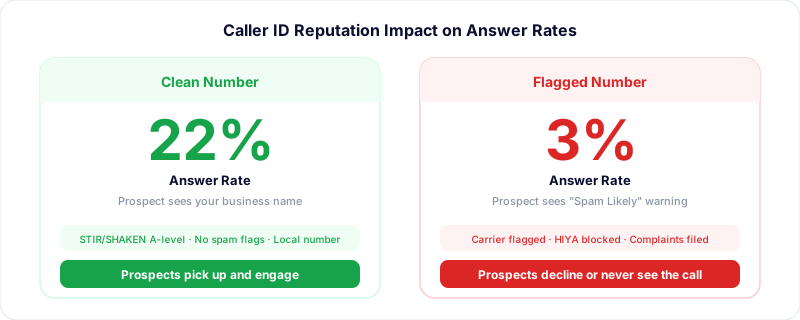
Your caller ID reputation is a trust score that carriers, spam databases, and call-blocking apps assign to your phone numbers. It determines whether your outbound call displays your business name — or gets labeled “Spam Likely,” “Scam Likely,” or blocked entirely.
Every phone number you dial from builds a reputation over time based on how you use it. Call too many people from one number, get too few answers, or trigger too many complaints — and the carriers start flagging you. Once flagged, your answer rates collapse. Prospects never see your name. They see a warning label.
81% of sales professionals say their company loses revenue due to spam flags. The worst part: most teams don’t realize their numbers are flagged until answer rates have already cratered and hundreds of prospects have been burned.
Carriers and spam analytics providers watch for patterns that distinguish legitimate business calls from robocalls and scammers. Here’s what triggers flags:
High call volume from a single number. Dialing more than 50–75 calls per day from a single DID is the fastest way to get flagged. Carriers interpret high-volume outbound calling from one number as automated spam behavior — even if every call is a legitimate sales rep.
Low answer rates. If you’re calling 200 numbers a day and only 10% answer, carriers notice. A low answer rate signals that the people you’re calling don’t recognize or want your calls — which looks exactly like spam.
Short call durations. A pattern of 5–15 second calls (ring, hang up, ring, hang up) is a classic robocaller signature. Even legitimate calls that go to voicemail and get quickly disconnected contribute to this pattern.
Recipient complaints. When a prospect sees “Unknown Caller” and picks up, they might report your number as spam through their carrier’s app or a blocking service like Hiya or Truecaller. A handful of complaints can tank a number’s reputation fast.
Failed calls and disconnects. High rates of wrong numbers, disconnected lines, or immediate hang-ups tell carriers your data is bad — another signal associated with spam operations.
Poor STIR/SHAKEN attestation. If your calls don’t carry proper cryptographic verification (more on this below), carriers treat them as higher risk and are more likely to flag them.
Your number’s reputation isn’t determined by one entity. Multiple systems evaluate your calls simultaneously:
Carrier analytics. AT&T, Verizon, and T-Mobile each run their own call analytics engines. They analyze call patterns, complaint volumes, and attestation levels to determine whether to flag a number.
Third-party blocking services. HIYA, Nomorobo, YouMail, Truecaller, and First Orion maintain their own databases of flagged numbers. These power the “Spam Likely” labels that appear on caller ID screens. Each service uses different algorithms and data sources.
STIR/SHAKEN attestation. This is the cryptographic framework that carriers use to verify call authenticity. There are three levels:
If your numbers carry B or C-level attestation, they’re significantly more likely to get flagged — even if your calling behavior is perfectly legitimate. This happens when numbers are routed through carriers that don’t have a direct relationship with the originating number.
Before you can fix a reputation problem, you need to know if you have one:
Free lookup tools. Truecaller, HIYA, and First Orion all offer free number lookups. Search your outbound numbers and see if any carry spam labels.
Carrier-specific tools. AT&T’s Call Protect, T-Mobile’s Scam Shield, and Verizon’s Call Filter each flag numbers independently. A number can be clean on one carrier and flagged on another.
STIR/SHAKEN attestation testers. Attestation verification tools can check what level your calls carry. If you’re seeing B or C-level, that’s a problem.
CNAM (Caller Name) registration. CNAM is the database that determines what name displays on the recipient’s phone. If your CNAM isn’t set — or is set incorrectly — prospects see “Unknown Caller” or a generic label instead of your business name. Proper CNAM registration won’t prevent spam flags, but it builds trust with the people who do answer. An unidentified call is far more likely to be reported as spam than one displaying a recognized business name.
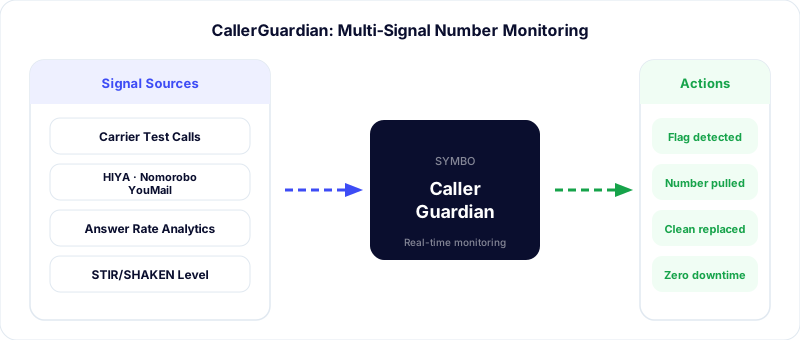
The problem with manual checking: Most teams don’t check until answer rates have already collapsed. By then, the damage is done — you’ve burned through prospects who will never pick up again. This is why proactive monitoring matters. CallerGuardian places real test calls to real phones on every major carrier and cross-references HIYA, Nomorobo, and YouMail databases continuously, catching flags before they impact your campaigns.
Distribute call volume across a monitored pool. Don’t rely on a handful of numbers for high-volume campaigns. Maintain at least 10–15 numbers per active area code and distribute calls across them to keep per-number volume low.
A note on rotation: some reputation vendors advise against number rotation entirely, arguing it mimics spammer behavior. There’s an important distinction here. Spammers cycle through disposable DIDs to evade flags — they burn a number, abandon it, grab a new one. That’s evasion. Distributing calls across a pool of numbers that are actively monitored, properly registered, carrying STIR/SHAKEN A-level attestation, and maintained with healthy reputation scores is fundamentally different. You’re not dodging flags — you’re preventing them from forming by keeping volume per number within safe thresholds. The key is that every number in the pool is clean and monitored, not disposable.
Cap calls per number. Keep each DID under 50 calls per day. At high volume, a parallel dialer with a large number pool handles this automatically — each call goes out from a different number.
Replace flagged numbers immediately. The moment a number gets flagged, pull it from rotation. Every additional call from a flagged number wastes a prospect. CallerGuardian automates this — flagged numbers get swapped for clean ones without rep intervention.
Use local presence dialing. Calling from a number that matches the prospect’s area code increases answer rates and reduces spam reports. Prospects are more likely to answer — and less likely to report — a local number. LocalEdge handles carrier-intelligent local number matching with thousands of monitored numbers.
Clean your data first. Wrong numbers and disconnected lines drive up failed call rates, which tank your reputation. Scrub your lists before loading them into the dialer. Remove invalid numbers, update area codes, and verify contact data.
Maintain healthy answer rates. If your answer rate is below 10%, something is wrong — either your data is bad, your numbers are flagged, or you’re calling at the wrong times. A healthy outbound team should see 15–25% answer rates with clean numbers and local presence.
Don’t rapid-fire dial. Even with a parallel dialer, spacing calls slightly and rotating numbers prevents the “machine gun” pattern that carriers flag. Symbo’s dialer manages this automatically.
Register for 10DLC (for SMS). If your sequences include text messages, 10DLC registration through the Campaign Registry is required. Unregistered numbers will have messages filtered or blocked by carriers.
Ensure STIR/SHAKEN A-level attestation. Work with providers who maintain direct carrier relationships and can guarantee full attestation on every call. B or C-level attestation increases spam flagging risk significantly.
Scrub against DNC lists. This is a legal requirement, but it also protects reputation. Calling numbers on the Do Not Call registry generates complaints, which generate flags.
If you discover flagged numbers, act fast:
1. Pull flagged numbers from rotation immediately. Every call from a flagged number wastes a prospect and generates more negative signals. Stop the bleeding.
2. Dispute with blocking services. Contact HIYA, Nomorobo, Truecaller, and First Orion directly. Provide evidence of legitimate business use — your 10DLC registration, business verification, opt-out compliance documentation, and call recordings showing real conversations.
3. Contact carriers. AT&T, T-Mobile, and Verizon each have processes for businesses to dispute spam labels. This is slower than third-party disputes but necessary for carrier-level flags.
4. Let flagged numbers cool. Some flags age off after weeks or months of inactivity. Don’t keep pushing calls through a flagged number hoping it’ll clear — it won’t. Rotate in clean replacements and let the flagged numbers rest.
5. Implement monitoring. The only way to prevent this from happening again is proactive monitoring. CallerGuardian catches flags within hours — not weeks — so you can replace numbers before they impact your campaigns.
Reputation management isn’t a standalone activity — it’s the foundation of every outbound call your team makes. Here’s how it connects to the rest of your sales stack:
Local presence dialing + clean reputation = maximum answer rates. LocalEdge matches the prospect’s area code with a clean, monitored number. The combination of local caller ID and no spam flags is what drives 4x answer rate improvements.
Parallel dialing + number rotation = sustainable high volume. A parallel dialer lets reps reach more prospects per hour, but only if the numbers are clean. Reputation monitoring ensures high-volume dialing doesn’t burn through your number pool.
Sequences + reputation management = consistent multi-touch outreach. If your numbers get flagged mid-sequence, every subsequent call step fails silently. Monitoring keeps your sequences effective from first touch to last.
Call outcomes + reputation data = smarter decisions. When answer rates drop on specific area codes or campaigns, outcome data combined with reputation data tells you whether it’s a messaging problem or a number health problem.
The DIY approach — if you’re managing reputation manually:
That’s a lot of manual work — and it only catches problems after they’ve already impacted your campaigns.
The Symbo approach — CallerGuardian handles all of this automatically. It monitors your numbers across every major carrier and spam database in real time, pulls flagged numbers before they burn prospects, provisions clean replacements, and ensures proper STIR/SHAKEN attestation on every call. Combined with LocalEdge for local presence and the parallel dialer for volume, your team dials with clean, local numbers without thinking about reputation management at all.
Your caller ID reputation is the invisible ceiling on your answer rates. You can have the best pitch, the most qualified list, and the hardest-working reps — but if your numbers are flagged, none of it matters. Prospects never hear your pitch because they never pick up.
Most teams learn about caller ID reputation the hard way: answer rates drop, pipeline dries up, and nobody knows why. By the time they check, dozens of numbers are flagged and thousands of prospects have been burned.
The fix isn’t complicated — it’s consistent. Rotate numbers, cap volume, ensure proper attestation, and monitor continuously. CallerGuardian handles the monitoring and rotation automatically, so your team can focus on selling instead of checking spam databases. See how it works →
Your answer rates are waiting
See how Symbo can help you answer more calls, qualify faster, and close more deals.
Free trial · No contract required · Setup in minutes
Industry
Comparing Nooks, Orum, and Symbo on dialing speed, local presence, number health, CRM integrations, and pricing. Find out which sales dialer fits your team's outbound motion.
Product
An outbound dialer is a phone system built for outbound sales calling. Learn the main dialer types, must-have features, key metrics, and how to pick the right one for your team.
Product
Local presence dialing matches your caller ID to your prospect's area code, dramatically increasing answer rates. Learn how it works, whether it's legal, and how to use it effectively.