Sales Techniques
What Is a Sales Cadence? Templates & Best Practices for 2026
Learn how to build effective sales cadences that combine calls, emails, and tasks. Includes proven templates and examples for different buyer personas.
Symbo Team
Learn how to build effective sales cadences that combine calls, emails, and tasks. Includes proven templates and examples for different buyer personas.
A sales cadence is a structured sequence of outreach activities—typically combining calls, emails, texts, and tasks—designed to reach a prospect over a specific period. Unlike a one-off email or single call, a cadence recognizes that most buyers need multiple touchpoints before they’re ready to engage.
The goal is simple: maximize your chances of getting a response by staying consistently visible while respecting the prospect’s inbox and time.
In 2026, high-performing sales teams aren’t just making calls. They’re orchestrating multi-channel cadences that feel personalized, not robotic.
Research consistently shows that the average prospect needs between 5-8 touchpoints before responding — and complex B2B deals often require far more. A single cold call or email? Unlikely to work alone. But a structured sequence, especially one combining different channels, dramatically increases your response rate.
Here’s what a good cadence does:
Multi-channel cadences consistently outperform single-channel outreach. Mailshake data shows multi-channel sequences can increase conversion rates by up to 250% compared to single-channel approaches, and the advantage compounds with each additional touchpoint.
A modern sales cadence typically includes:
1. Initial Outreach (Day 1)
2. First Follow-Up (Day 3)
3. Second Follow-Up (Day 7)
4. Third Follow-Up (Day 10-14)
5. Final Push (Day 21)
Channel Mix: The best cadences use a balanced combination of calls, emails, and social touches (LinkedIn, etc.). The exact ratio varies by persona and industry — test different mixes to find what works for your audience.
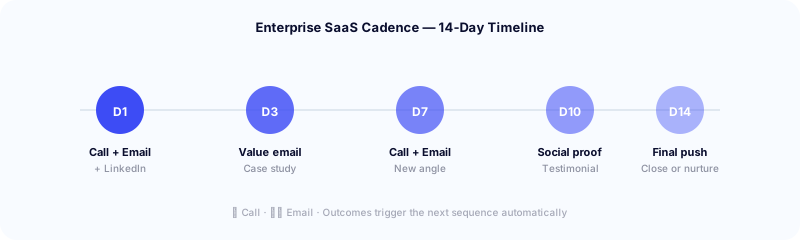
Here’s a battle-tested cadence for B2B SaaS sales (adjust for your industry):
Day 1: Initial Contact
Day 3: First Follow-Up
Day 7: Second Touch
Day 10: Third Touch
Day 14: Final Push
Not all prospects are the same. Adjust your cadence based on who you’re targeting:
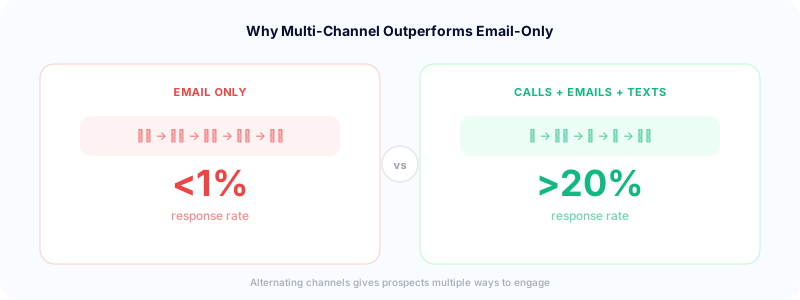
Here’s where most teams get it wrong: they use calls or emails, not both in sync.
The magic happens when you:
Example:
This call-then-email approach consistently outperforms single-channel outreach by giving prospects multiple ways to engage. Using a power dialer for the call steps keeps your reps in rhythm while the cadence handles the follow-up.
One often-overlooked boost: local presence dialing. If your call steps show a toll-free or out-of-state number, most prospects won’t pick up. Matching your caller ID to the prospect’s area code can increase answer rates by 4x — which means your carefully crafted cadence actually gets heard. Tools like CallerGuardian keep those numbers clean so they don’t get flagged as spam over time. Maintaining your caller ID reputation ensures your cadence actually reaches prospects. See how local presence dialing works and why it matters for your cadence.
Manual cadences are hard to scale. That’s why teams use automation platforms like Symbo to:
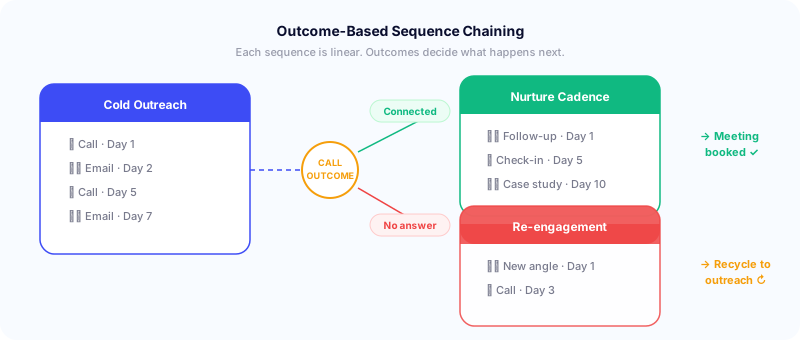
With Symbo’s sequences feature, you can:
Too long: 30+ days is often too slow. Most responses come within the first 14 days.
Too aggressive: 5+ touches in 7 days feels like spam. Spread it out.
Wrong channels: Using only email for top executives. They prefer calls.
No personalization: Form email templates feel robotic. Use at least one personalized detail per email.
Ignoring “not interested”: If someone says no, respect it. Move them to nurture, not another cold call.
Not tracking results: If you don’t measure cadence performance, you can’t improve it. Track response rate by type, channel, and buyer persona.
For proven cold call openers that pair well with your cadence, see our guide to pattern interrupts in sales.
Track these to optimize:
The traditional cadence — fixed steps, fixed timing, manual templates — works. But it’s starting to show its age. The next evolution is AI that adapts the cadence in real time: choosing the right channel, the right message, and the right timing based on what’s actually working for each prospect.
Imagine a sequence that notices a prospect opens every email but never picks up the phone — and automatically shifts to email-heavy outreach. Or one that reads a call transcript and drafts the perfect follow-up email based on what was actually discussed.
This isn’t science fiction. It’s where sales engagement is heading, and it’s something we’re actively building at Symbo. For now, a well-structured linear cadence with outcome-based automation gets you 90% of the way there. The AI layer will handle the last 10%.
A well-structured sales cadence isn’t pushy — it’s respectful. You’re reaching out consistently but spacing it out. You’re using multiple channels so the prospect can choose how they want to engage. You’re bringing value, not just asking for time.
In 2026, sales cadences are table-stakes for any serious sales team. Whether you’re a solo founder or a 50-person sales org, having a repeatable, multi-channel cadence will drive more responses than scattered cold outreach ever will.
Start simple. Build one cadence for your highest-value persona. Run 50 prospects through it, measure results, and iterate. You’ll quickly see where the leverage is — and scale from there.
Symbo’s sequence builder makes it easy to set up multi-channel cadences with outcome-based automation. Pair it with a parallel dialer and local presence for maximum connect rates. Book a demo to see it in action, or check out pricing to get started.
Your answer rates are waiting
See how Symbo can help you answer more calls, qualify faster, and close more deals.
Free trial · No contract required · Setup in minutes
Industry
Comparing Nooks, Orum, and Symbo on dialing speed, local presence, number health, CRM integrations, and pricing. Find out which sales dialer fits your team's outbound motion.
Product
Learn what caller ID reputation is, why numbers get flagged as spam, and how to maintain clean numbers that prospects actually answer.
Product
An outbound dialer is a phone system built for outbound sales calling. Learn the main dialer types, must-have features, key metrics, and how to pick the right one for your team.